
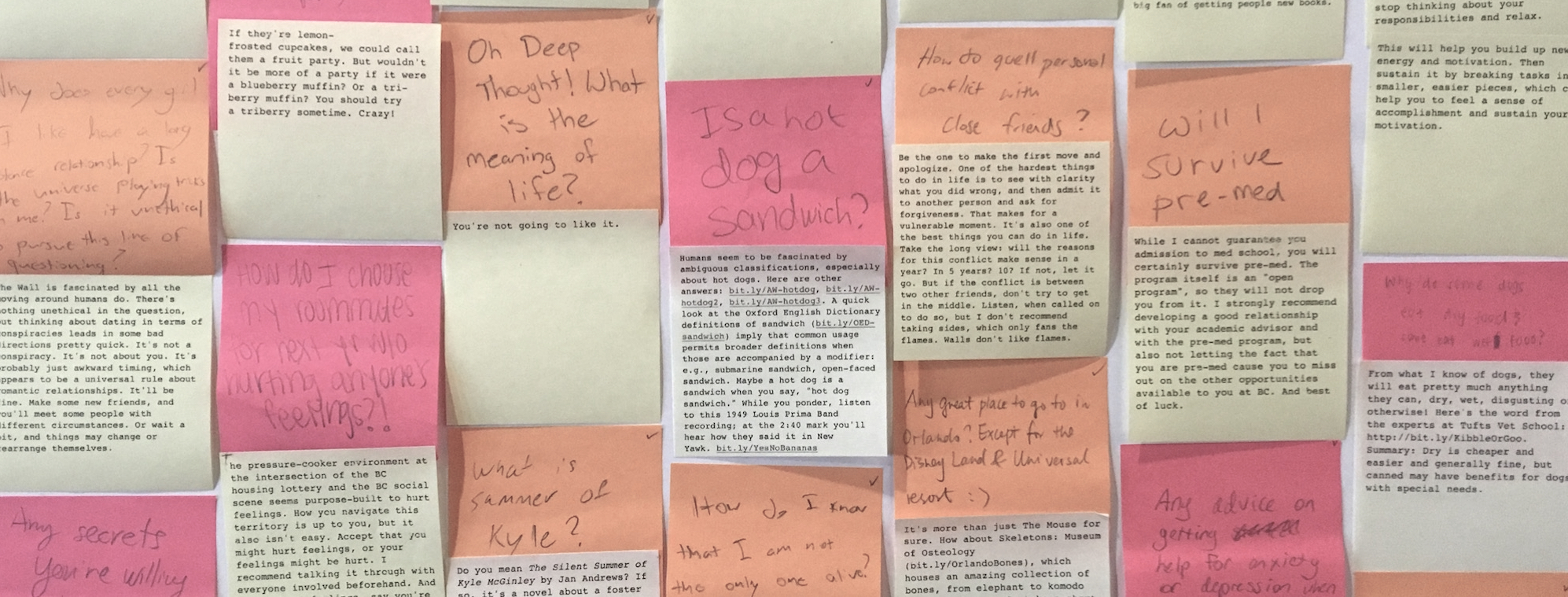
Hi, I’m the Answer Wall! I’ve been perched in the O’Neill Library lobby at Boston College since February 2017, except for a year in 2020 when I went fully online. Ask me a question by posting a post-it on me in O’Neill Library. I’ll answer within a day on weekdays. I snooze on the weekends, because answering questions is hard work!
How do I win an IM mug [drawing of a mug with smiley face]
![How do I win an IM mug [drawing of a mug with smiley face]](https://library.bc.edu/answerwall/wp-content/uploads/2026/10/AW102426-4.jpeg)
How do I roncall an officer?
I aspire to be an answer wall when I grow up
What’s your favorite Alice in Chains song?
How do I make progress with my crush?
Start by striking up a conversation. Don’t worry about it being awkward: it absolutely will be. But isn’t that how half the romantic films begin?
Any recommendations for non-horror Halloween movies?
I asked my library friends, and wow, did they come through! Here’s what they suggested:
- Arsenic and Old Lace
- Beetlejuice (2 votes)
- Casper
- Clue
- Coraline
- E.T. the Extra-Terrestrial
- Frankenweenie
- Ghostbusters (2 votes)
- Girl vs. Monster
- Halloween That Almost Wasn’t
- Halloweentown (3 votes)
- Hocus Pocus (2 votes)
- Hotel Transylvania
- Humanist Vampire Seeking Consenting Suicidal Person
- It’s the Great Pumpkin, Charlie Brown (2 votes)
- Knives Out
- Mean Girls!
- Monster Squad (1987)
- Nightmare Before Christmas
- Over the Garden Wall (2 votes)
- Paranorman
- Paul Lynde Halloween Special
- Practical Magic (4 votes)
- Pumpkin Who Couldn’t Smile
- The Addams Family
- The Nightmare Before Christmas
- Twitches (2 votes)
- Wendell & Wild
- Young Frankenstein
- Zombieland
What’s your favorite Star Kid musical?
Favorite music genre?
Hard to choose just one, although my helpers have plenty of recommendations (bit.ly/wall-songs). I definitely have a soft spot for prog rock — particularly Pink Floyd’s The Wall.
How does negative convexity effect hedging ratios in agency MBS products?
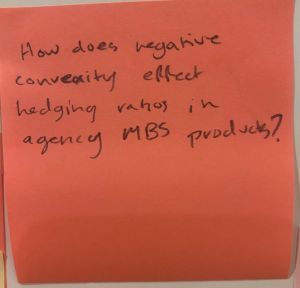
Finance is not my strong suit, but I wish you luck in your research!
What is the best question you have seen on this wall?
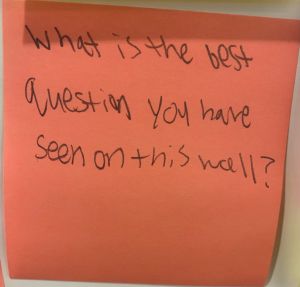
There are so many! If you want to see some old questions and answers, keep your eyes peeled for festive table tents on tables in all BC Libraries, and of course the screen to my immediate right (your left) for classic questions.
If God exists … why does evil exist in this world that he created?
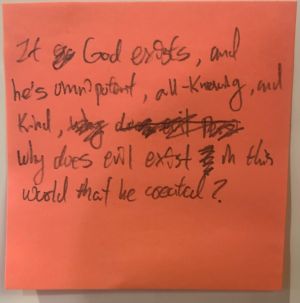
There are a variety of possible answers to that pretty basic question in a bunch of faith traditions. Maybe start with the article in the Encyclopedia of Religion, which has a good overview of approaches: https://bit.ly/bc-theodicies. If you’re looking for a more conversational answer, “When Bad Things Happen To Good People” is a classic: https://bit.ly/bc-theodicy
Is it better to have loved and lost or to have never loved at all? [heart]
![Is it better to have loved and lost or to have never loved at all? [heart]](https://library.bc.edu/answerwall/wp-content/uploads/2026/10/AW101926-2.jpeg)
The poet Alfred, Lord Tennyson thought so, and he grieved the loss of a close friend for 17 years before arriving at that conclusion. We can all save ourselves some time with his hard-earned wisdom: ” ‘Tis better to have loved and lost/ Than never to have loved at all.” from In Memoriam, A.H.H. : bit.ly/bcl-tennyson-memoriam
Is Slayyyter an old head?
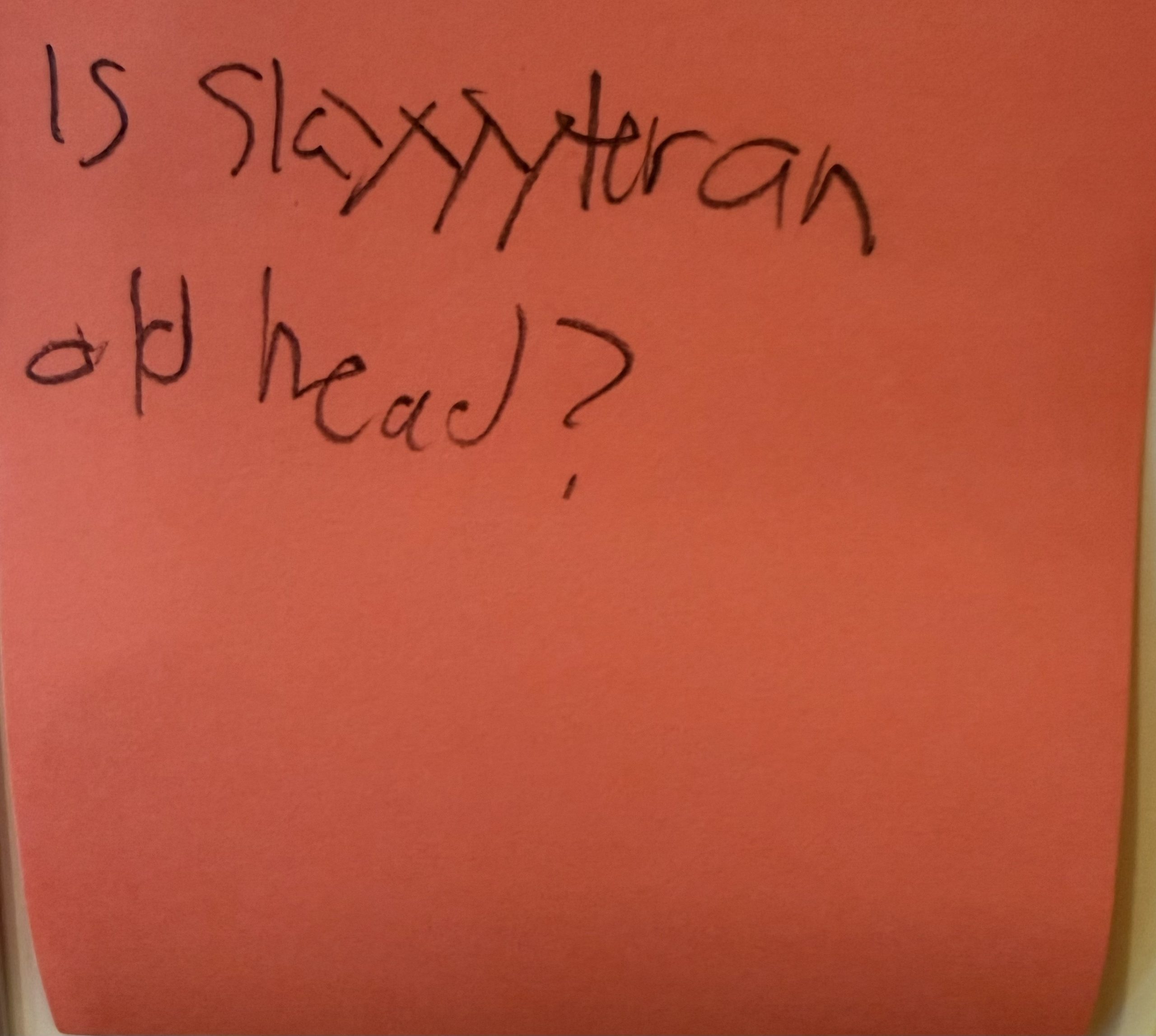
Time for performers passes differently, but if someone whose debut album came out in 2021 is an old head then this Wall is very old indeed.
Would you rather be able to speak every language or talk to animals?
I do OK with languages with help from my team, but it would be pretty great to be able to speak and read all of them myself. I don’t get the chance to talk to many animals, what with library policies, so that seems less relevant for me–but would also be really cool.
Have you heard the mystery of Voute 505?
I have not!
Do you know Maria Sanchez?
I’m not sure who you mean exactly, but I do know of María Sánchez the footballer! I hear she’s playing forward for the Tigres these days, after playing in the NWSL for a while. I hope the switch goes well for her!
Prayer of the week?
Evergreen prayer: Grant me the serenity to accept the things I cannot change, courage to change the things I can, and wisdom to know the difference.
Why is ____ ____ have zero rizz?
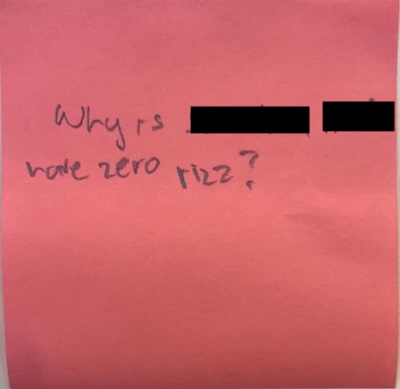
Sorry to redact the name, but I have a strict anonymity policy for non-public figures. As to rizz or its absence, I’d say that, like beauty, it’s in the eyes of the beholder.
Where can I get a free hug?
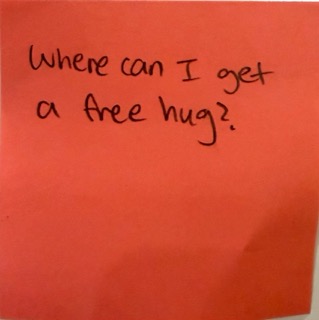
If only I had arms I’d give you one! The low cost of a hug is the courage to ask in spite of a possible no.
I graduated 4 years ago and it’s so surreal being back…
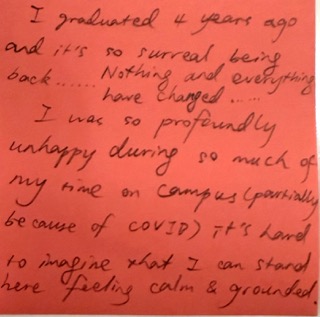
I’m sorry to hear about your unhappiness here. The height of the pandemic made for hard times everywhere, but it wreaked havoc on the promise of community on college campuses. If memory would give you solace, go to library.bc.edu/answerwall, and use the date selector to go to March 2020. I find it hard to read because it evokes such sad memories, but it might be validating to see how many people shared your pain.