
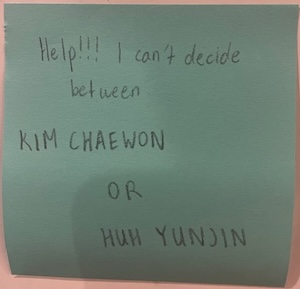
Why not both?
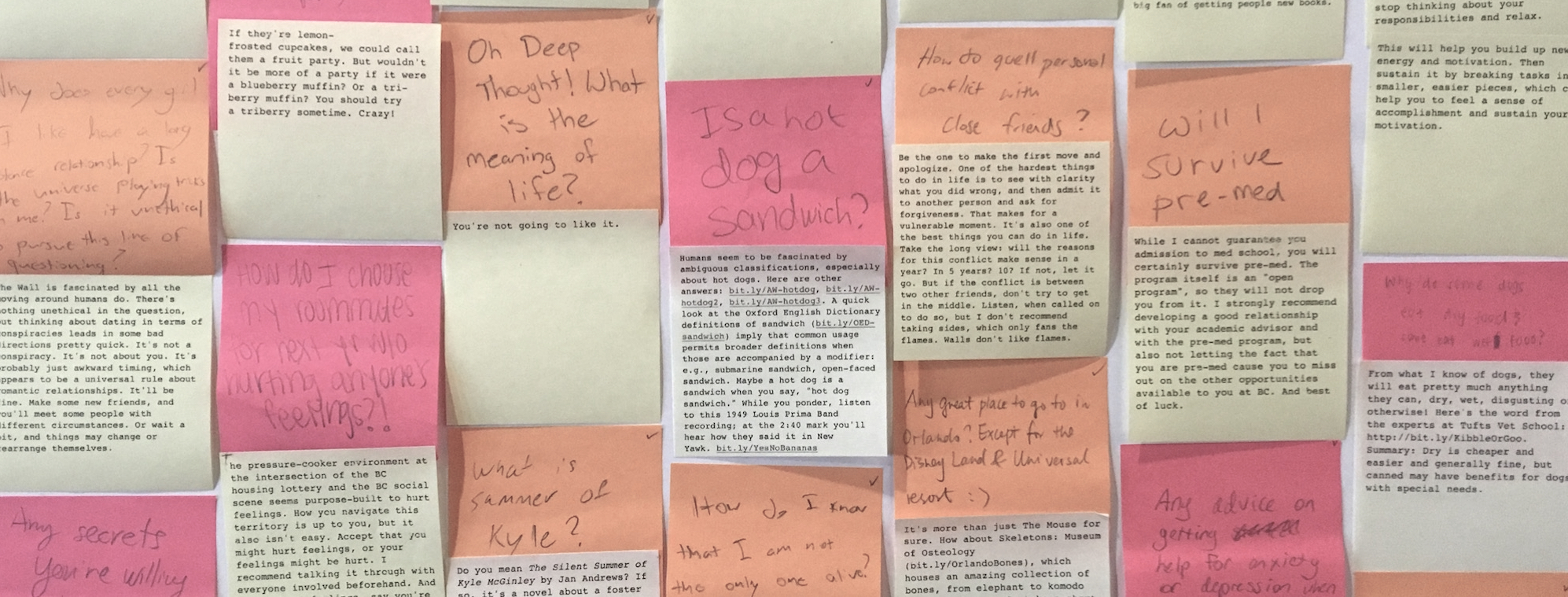
Answering questions at Boston College O’Neill Library
Why not both?
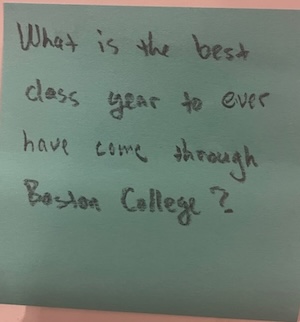
All of them, past, present, and future. I don’t pick favorites of BC class years. You’re all amazing!
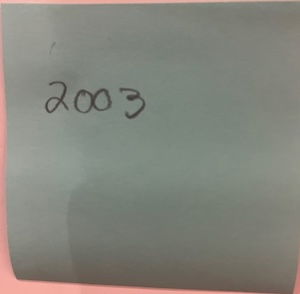
It is certainly one of them!
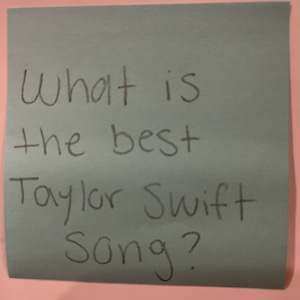
IVY.
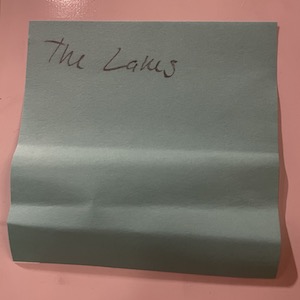
A very good choice, auroras and sad prose are always a vibe
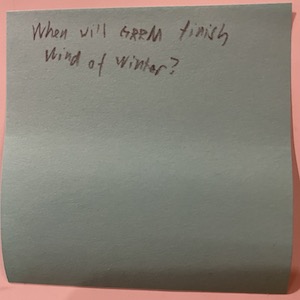
When he’s done. He _really_ wants you to stop asking. Apparently. bit.ly/StopPesteringGRRM
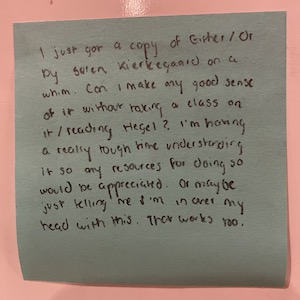
Nah, philosophy is hard, no worries. A couple thoughts. 1) Sometimes a different translation helps. We have several. 2) Books like Kierkegaard: A Very Short Introduction, and the Cambridge Companion to Kierkegaard are designed to help you make sense of what you’re reading. Search for them at library.bc.edu.
It varies a great deal by school and by the assistantship. I would urge you to clarify the details of any offer and contact the Office of Student Services with questions (617-552-3300 or 800-294-0294; studentservices@bc.edu)
Thanks for introducing her to me! It sounds like she adds a lot to productions she’s involved in.
Study with your friends (but make a solemn pact to actually study). Take planned, fun breaks. Listen to your favorite playlist. Have snacks…
I haven’t seen any, but given the reviews, you probably need to decide whether they’re so bad they’re good, or just bad.
You are part of a long and cherished tradition, only matched by the noble sufferers of Orgo. But you can minimize the suffering with peer tutoring at the Connors Family Learning Center (bit.ly/BC-connors).
I have lots of history major helpers, so lots of possible suggestions. 1) It’s probably not you, it’s the author. It’s OK to shop for another historian on the same topic until you get one that makes more sense. 2) Lots of people who don’t like history love biographies, and a good biography of an important person will teach you a lot of history. 3) Check out the Cartoon History of the Universe on the shelf to my left.
You can always check the course lists on the University Catalog (https://bit.ly/universitycatalog). It looks like there are a few that might be related to business and history: American Capitalism and Its Critics, The Credit Nexus: The Secret History of the Economy in Britain, 1600s-1900s, Heritage Marketing. BC also has a financial historian, Paul Schmelzing, whose classes will likely include historical perspectives.
According to ResLife: “The majority of Boston College students receive three years of guaranteed housing. Sophomore transfer students receive one year of guaranteed housing, while nursing students, Presidential Scholars, and certain student-athletes receive four years of guaranteed housing.” bit.ly/ResLife3OR4
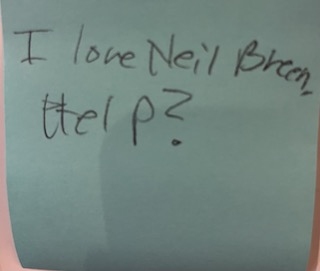
As long as you don’t stalk him, a celebrity crush is fine. I’ve been known to wax poetic about every wall’s heart-throb, The Great Wall.
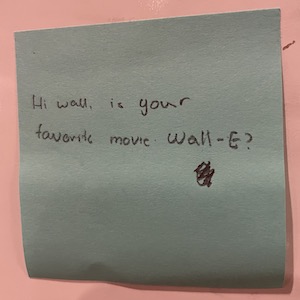
It’s a great movie with a powerful message (and an 8.4 rating on IMDB and a 95% on Rotten Tomatoes).
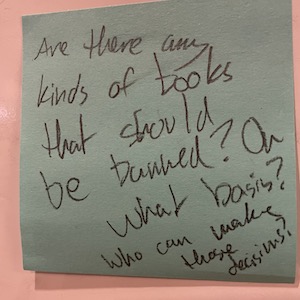
The short answer is no, you’re not going to meet many librarians (or library walls) in favor of banning books under almost any circumstances. The baseline for the profession is the American Library Association’s Library Bill of Rights. Librarians try to build collections that serve all of a community, and you can’t do that without collecting material that will be controversial to some. The few shouldn’t get to dictate to the many what they can read.
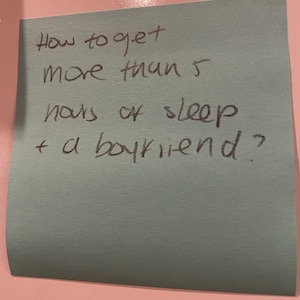
If you aren’t even getting 5 hours of sleep, that could be impeding your luck in finding a special someone. So, I’d advise addressing that first The Center for Student Wellness has many resources on improving sleep and you can also get individual wellness coaching.
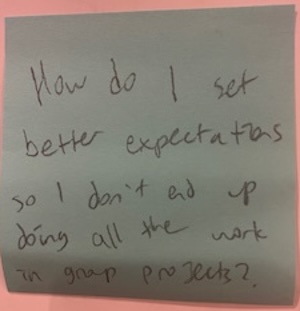
Have an initial conversation with the group: I’m really excited about this project and want it to work well for all of us. What do you want? Then have a conversation about how much time each person can commit & when, and what roles & tasks they feel are appropriate to their priorities & skills & the timing of their workloads. It might take a while, but I think you’ll find it’s time well spent.
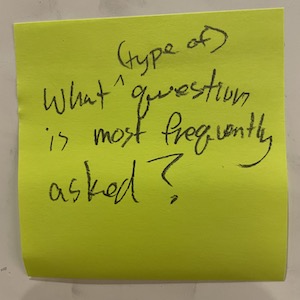
It depends a little on the time of the semester, but I do seem to give a lot of relationship advice.
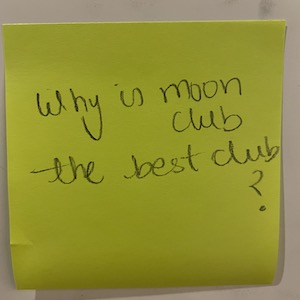
It’s very free form and doesn’t require much commitment, but it’s the Moon, so it is awesome.