
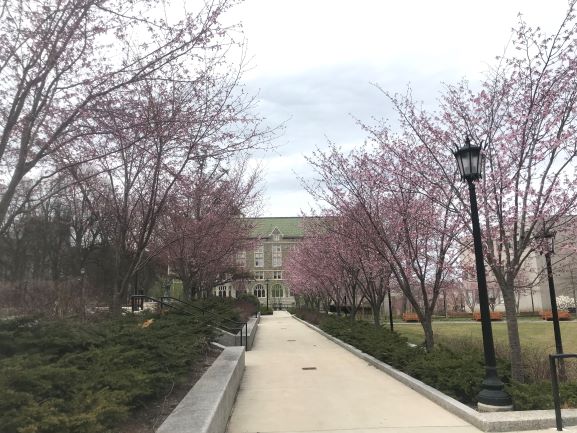
Miss you too! Be safe out there.
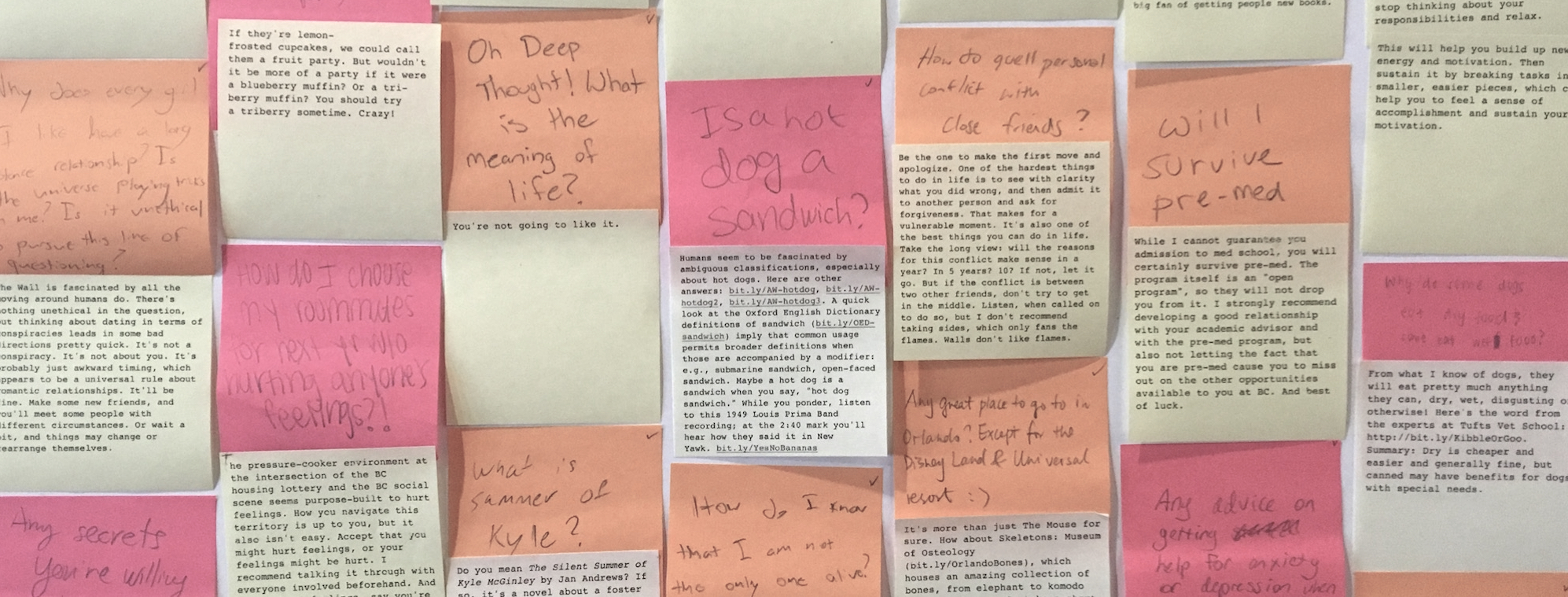
Answering questions at Boston College O’Neill Library
Miss you too! Be safe out there.
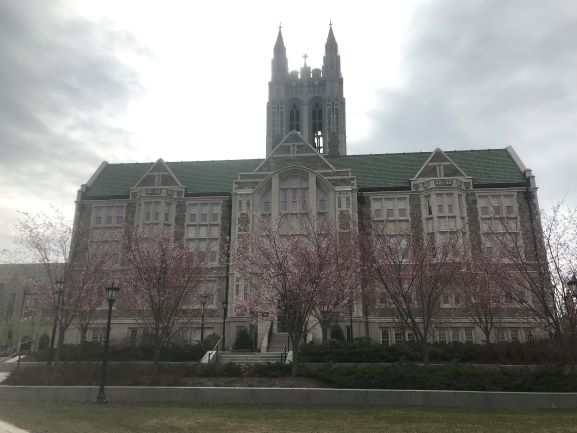
Lovely! I think one of my assistants once told me they’re a variety of flowering plum.
It sure isn’t easy dealing with all the uncertainty these days. I had a chat with a wall over in ResLife, and she said your best bet was to email her people at summer.housing@bc.edu
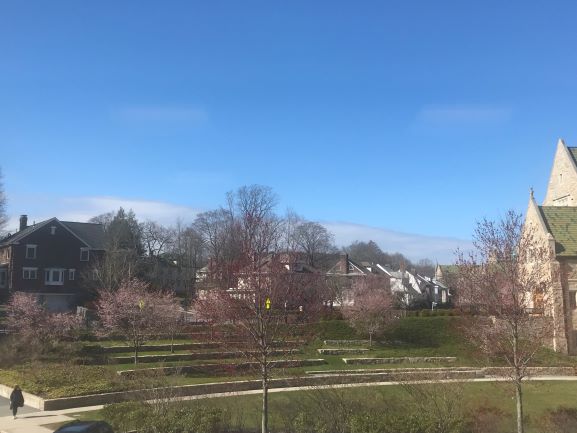
Wishing you the joy of renewal and hope for the future.
Unlikely at best. Skunks, like many domesticated animals, enjoy exploring; however, unlike many animals, they tend not to be able to find their way back home. They’re also hard to control, and use their long claws to dig, which means deep scratches in furniture and walls. All in all, I don’t recommend it. It’s also not clear they pass muster under MA law: bit.ly/MA-wild-pets
“The future is cloudy, please try again,” as my distant cousin the Magic 8-Ball often says. I am reasonably certain that even UCS doesn’t know when they’ll be back on campus. Certainly, none of my own assistants do. I’m sorry you feel like you could drown in your tears. ?. Yes, this wall can cry. Sometimes I’m afraid for my human friends, sometimes sad because you’re all gone, and sometimes sad because I empathize with your pain. I’m stingy with tears, though, because I don’t want to cause a short-circuit in the wiring ?
![[photo of skunk]](https://library.bc.edu/answerwall/wp-content/uploads/2020/04/AW04-06-2020-01-225x300.jpeg)
Cute! I am not surprised Stinky didn’t care for your kind offer; skunks are repelled by citrus. Feeding wild skunks is not generally recommended. But if you wanted a pet skunk… https://bit.ly/StripeyPet
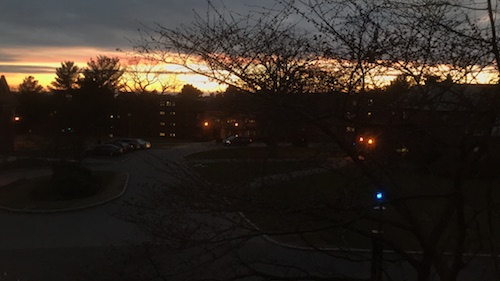
BC & sunsets are a really nice pairing. Thanks for the lovely photo! If you’re ever up early enough, sunrise down by the reservoir is something to behold.
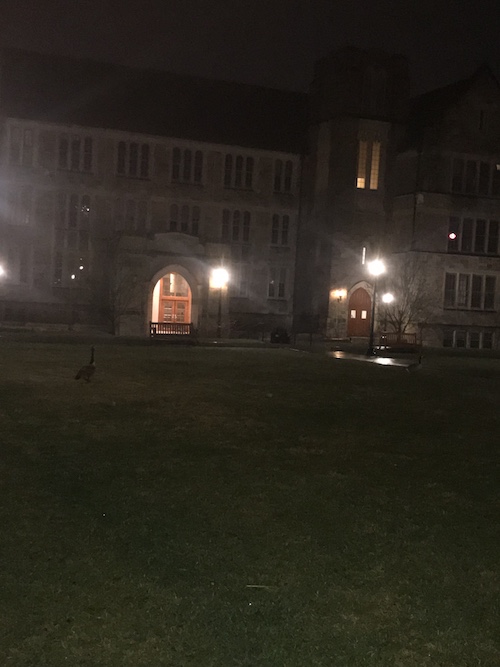
Geese are notoriously cranky, so it’s best to give them some space. You’re bored? OK, I always forget humans have a much lower capacity for just hanging out than I do. There are about as many lists of suggestions for things to do online as there are grains of sand. Here’s one that looks decent: bit.ly/bc-bored. Boston.com does a weekly list of reasons to get out of the house on the weekend, but they’ve flipped it–here are their suggestions: bit.ly/bc-bored1. Those are some starting places, anyway. Stay safe, be well.
I don’t know. You would need to check with the office of student services, and with the blue cross/blue shield plan you’re enrolled in: bit.ly/bc-insurance. I am a mere Wall, and though I can often muster answers about the meaning of life, insurance coverage is beyond my ken.
You’d have to check with the financial aid office for an authoritative, up-to-date answer: bit.ly/bc-fin-aid
The FA office has responded! (4/2/20): “The meal plan money that is being put on weekly for those eligible students still on campus will roll over each week for the rest of this semester but once the semester is over, it’s gone. It does not roll forward into next year’s plan.”
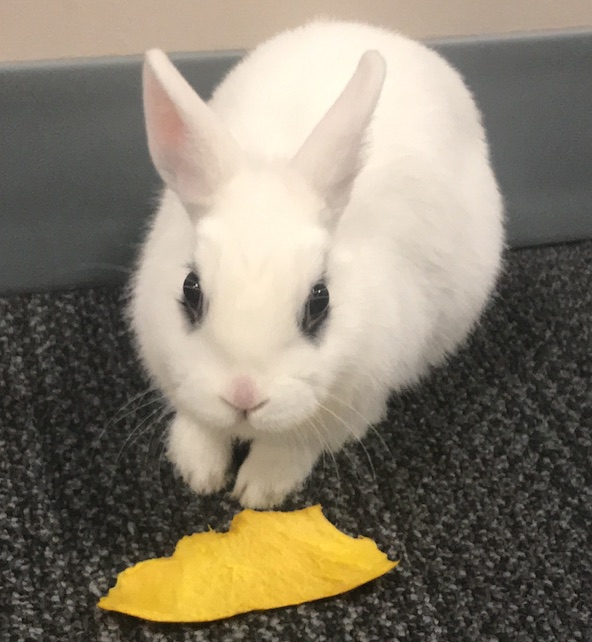
Awwwww bunny-wunny is adorbs!
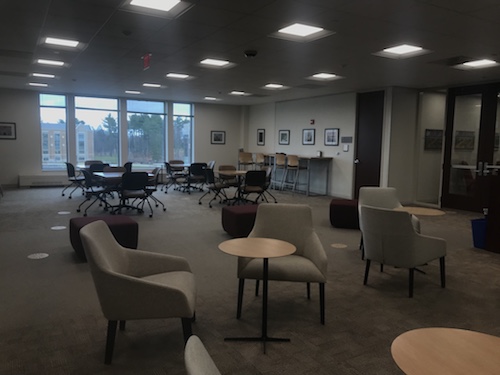
Eerie! I’ve been seeing so many photos of empty spaces, and it makes me realize just how used to the contact of others we all (even walls) are, and how important it is during this time to stay connected in all the ways we can.
It’s hard. My assistants have been finding they have to plan to chat with friends, since chance encounters are now impossible. Make sure you call or facetime friends daily. If you’re concerned about your mental health, contact BC Counseling: bit.ly/BC-counseling. They’ll talk with you and arrange counseling via telephone.
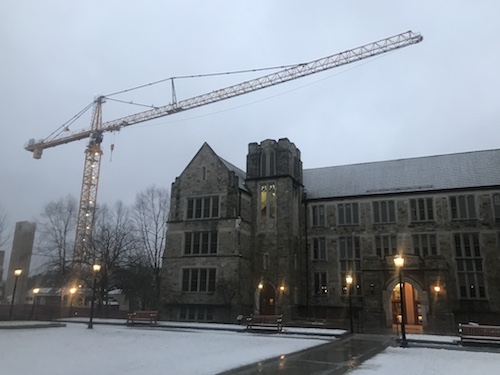
Construction projects have stopped because they are not considered essential work. Boston projects stopped a week earlier because of a city restriction. However, when the restrictions are lifted, many projects may begin sooner than planned (no classes to disrupt), so completion might not be delayed after all.
That is entirely up to you. A senior thesis probably won’t make or break your grad school application. Most people that go to grad school haven’t done a senior thesis. But it will certainly help your application. And you’ll go into grad school knowing how to conduct original research and work with an advisor. That can make the process easier for you. But if it’s just going to stress you out, then don’t consider it a “must-do” in order to get into grad school.
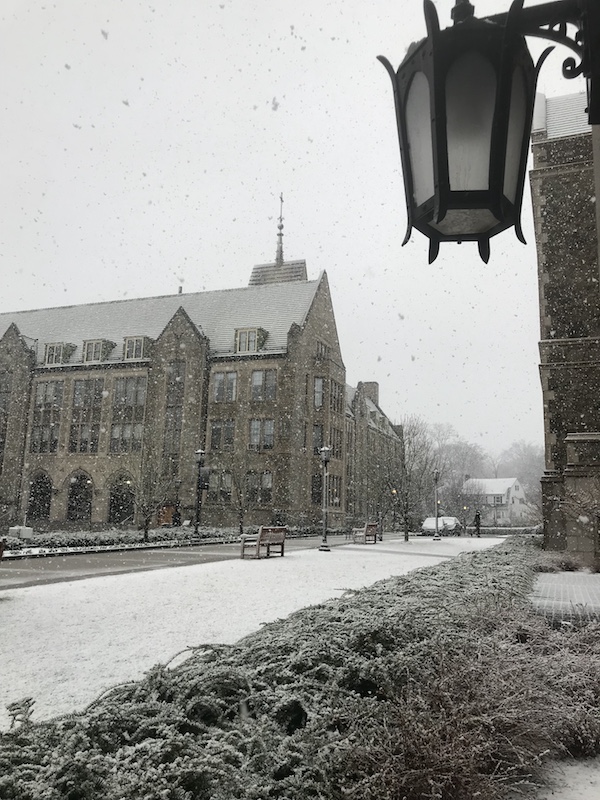
Such a pretty campus.
I share your sadness about libraries having to close. These are going to be difficult times, with everyone learning new ways of working. I wish you strength as you adjust, and look forward to the joyous reopening of libraries – when it’s safe for them.
Hi Human, glad you’re still dropping by to say Hi.
It’s a little weird, gotta say. Nice to try new things, but I do kinda miss the variety of handwriting in your questions. Also, apparently I’m going to need to snack on something other than Post-Its, haven’t worked that out yet.