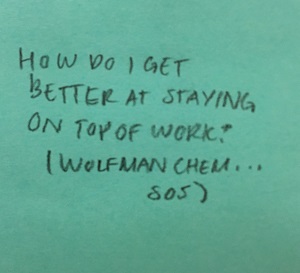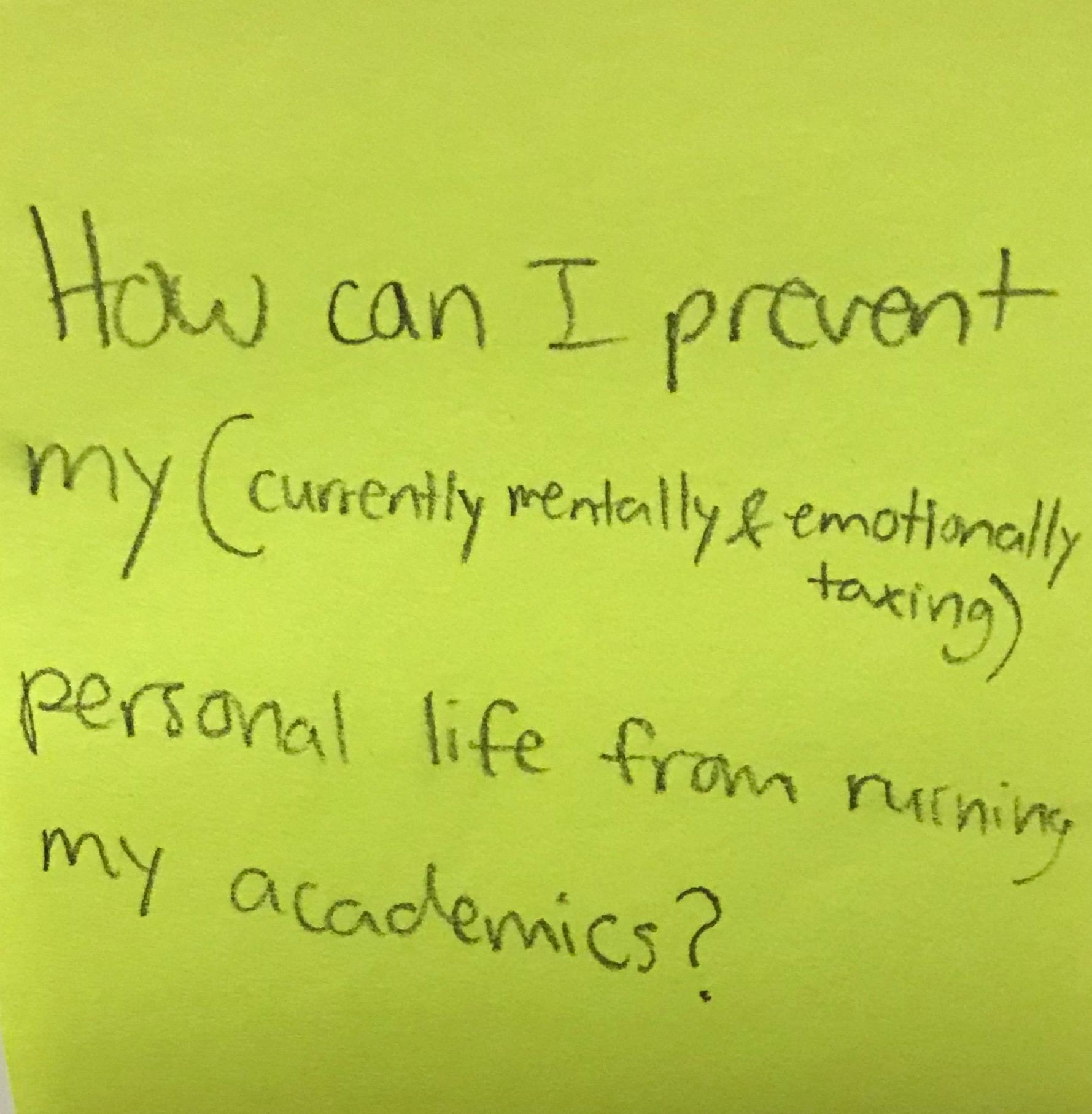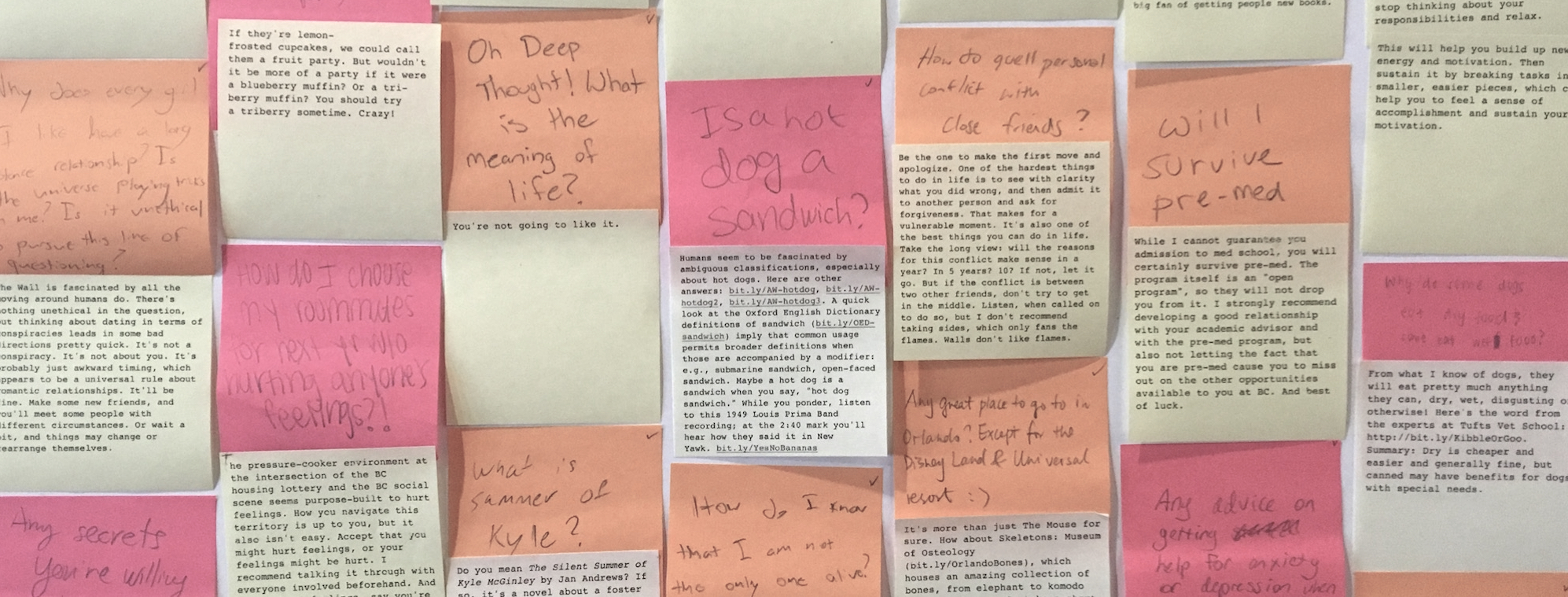
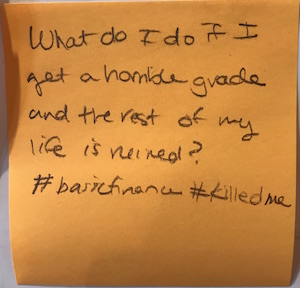
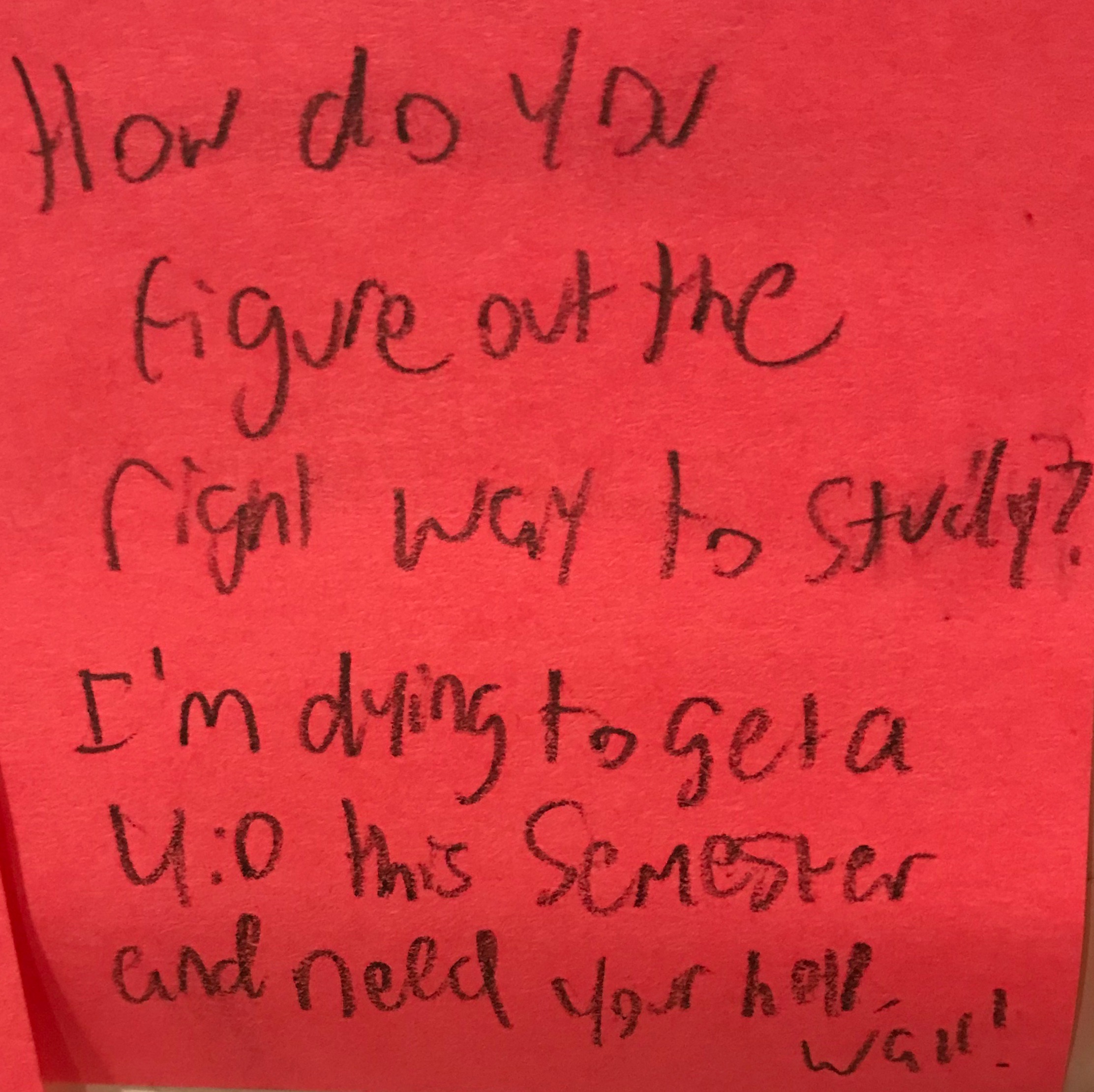
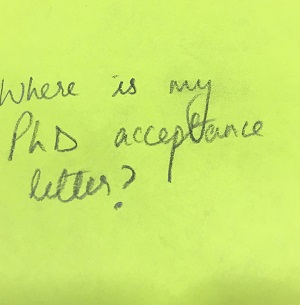
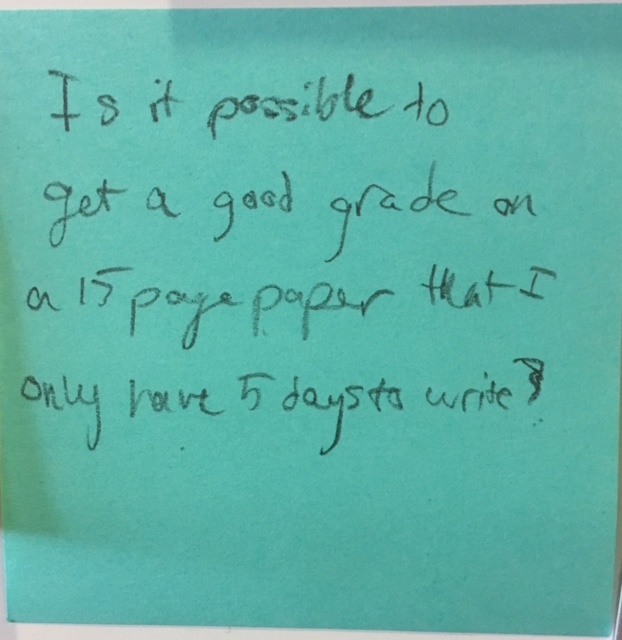
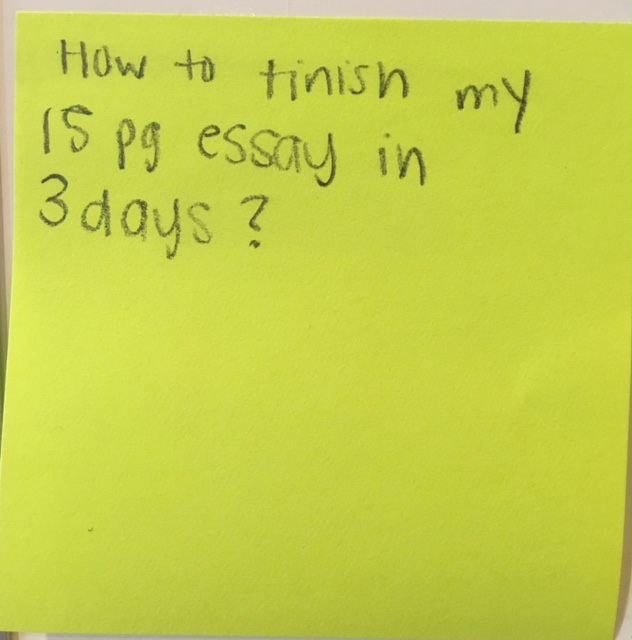
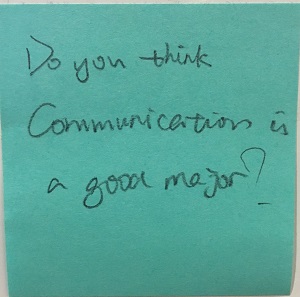
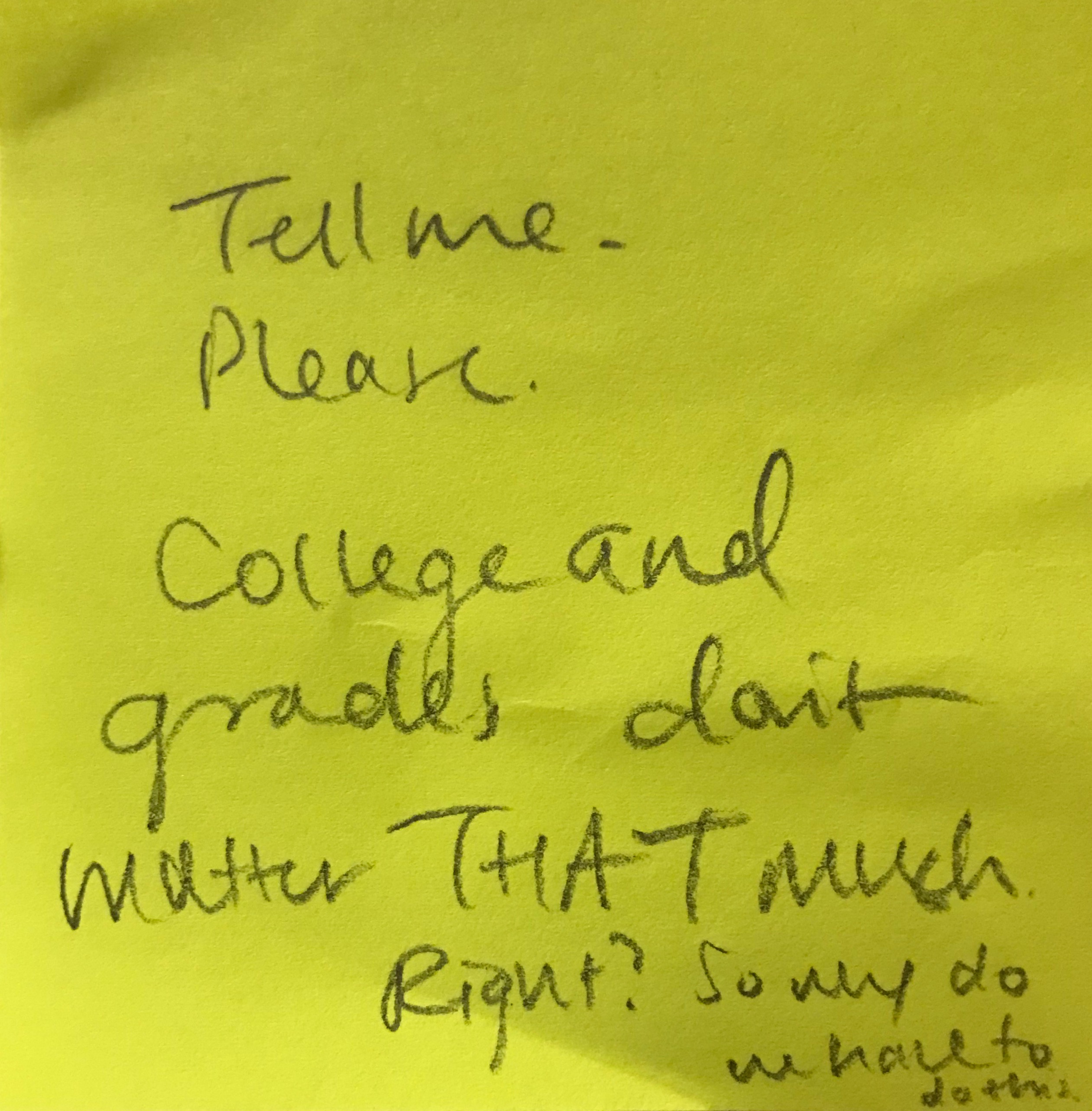
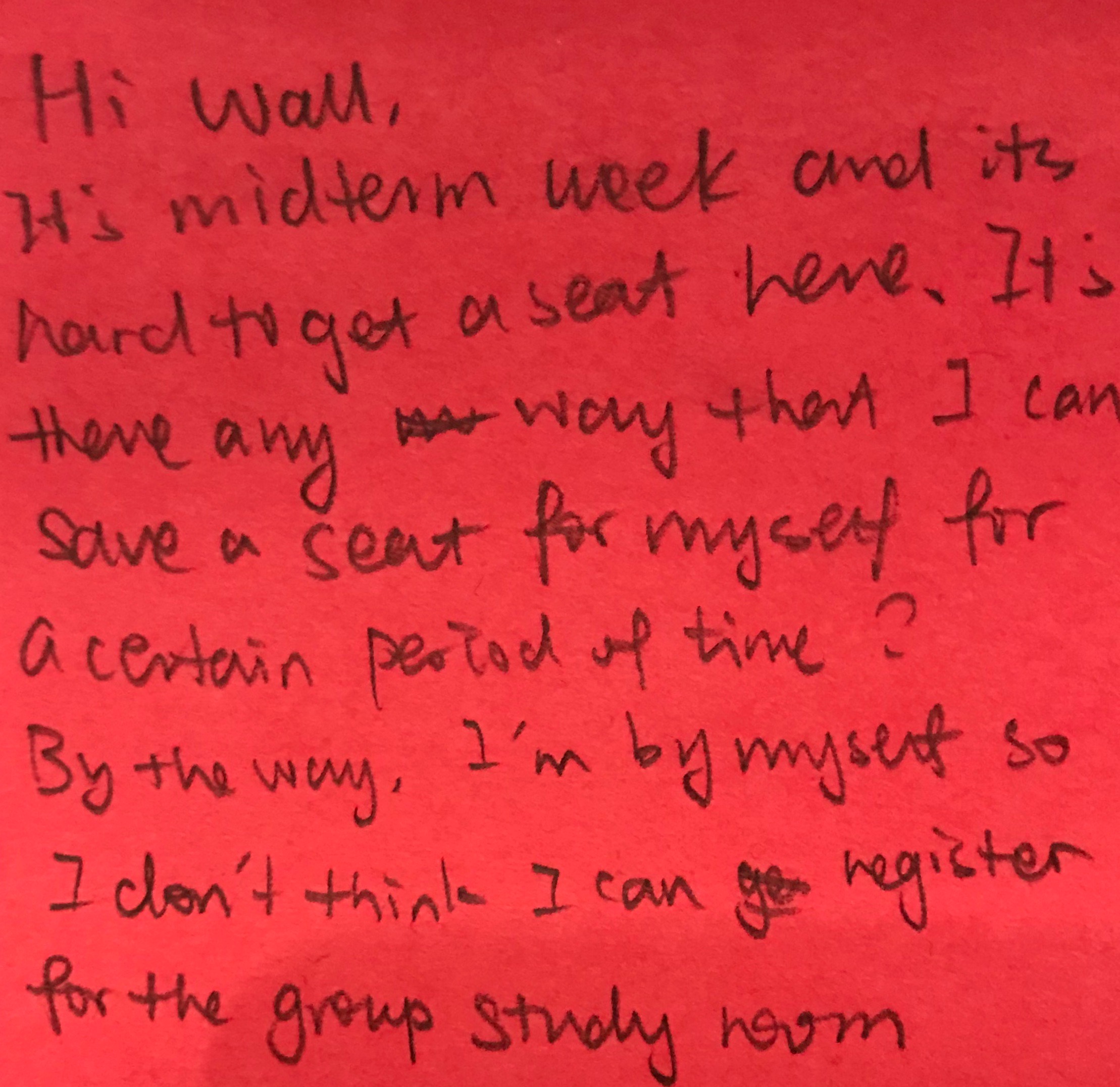
Though it may seem like it, one grade will not ruin your life. I promise! It may, however, present a useful opportunity to reconsider some things. First, think about why you’re struggling. I recommend talking to the staff of the Connors Family Learning Center (bit.ly/BC-connors) if you want to improve your study methods or if you need a little extra help. If the issue isn’t your studying, consider whether it is your interest level. Perhaps this just isn’t your favorite subject. If so, you’re in luck! BC offers many wonderful departments on a range of subjects. You might talk to a trusted advisor or professor about options or meet with the Career Center (bit.ly/BC-career) to see what careers paths different subjects offer.
![Why do we use grad[e]s to be a measure of our knowledge [unclear word] ?](http://library.bc.edu/answerwall/wp-content/uploads/2018/04/aw040418-5.jpg)


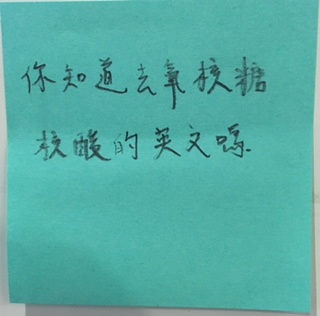
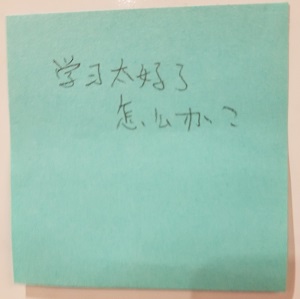
![学习太好了! 怎么办? (My studying is so great! What do I do?) Become a stripper Go [redacted] a [redacted].](http://library.bc.edu/answerwall/wp-content/uploads/2018/02/aw021518-redactionquestion.jpg)
![[in Chinese] I have a lot of math homework. What should I do? :)](http://library.bc.edu/answerwall/wp-content/uploads/2018/02/aw020718-6.jpg)
![[In Chinese] It is hard for me to study. What should I do?](http://library.bc.edu/answerwall/wp-content/uploads/2018/02/aw020718-5.jpg)