
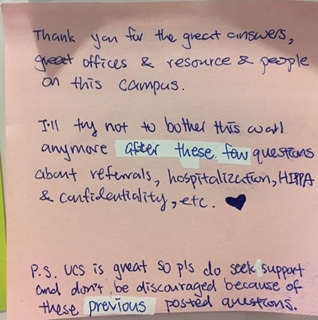
You’re welcome. I hope your posts have inspired other people who need help to seek it.
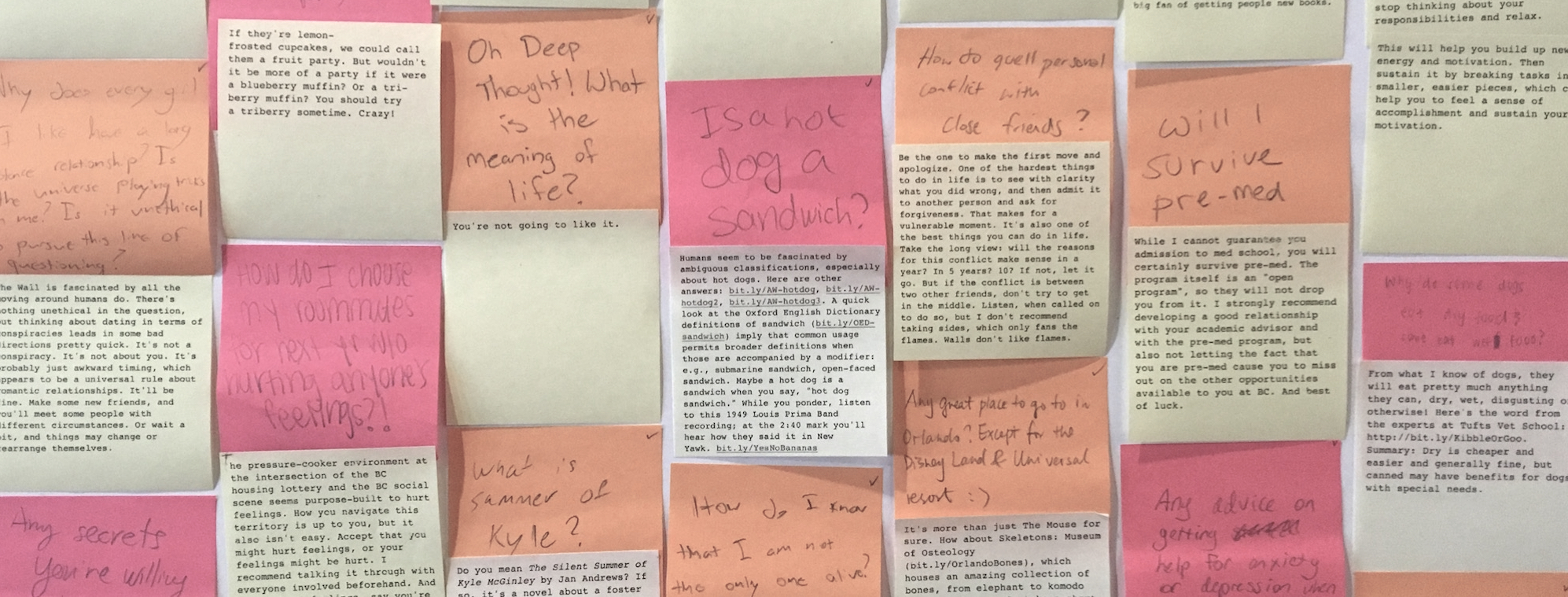
Answering questions at Boston College O’Neill Library
You’re welcome. I hope your posts have inspired other people who need help to seek it.
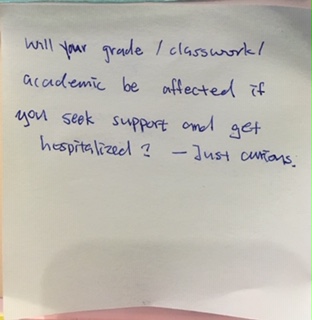
It would be the same as for any hospitalization, such as for a broken bone or an acute infection. I’d stay in close contact with your advisor, who can send notices to your professors about a medically-excused absence. It would be wise to contact your professors yourself, too, when you’re able, in order to arrange ways to make up lost work, get class notes, etc.
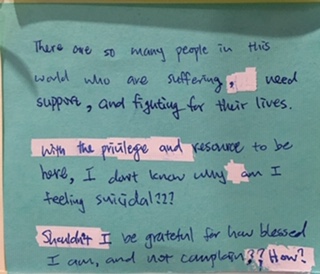
Suffering takes all kinds of forms. No suffering is de-legitimized by social station or privilege. Gautama Buddha, who had been in line for a throne before he renounced, said suffering is a given for everyone. Christianity says much the same thing but in different words: we live in a fallen, post-Eden world. It sounds like at the moment, you’re suffering more than many. I hear you. I care about you. I believe you can get through this intense bout of suffering. Remember, anyone suffering like this has people they can talk to, such as the PEC at university counseling (call health services at 617-552-3225 and ask to talk to the PEC) or at the national suicide prevention hotline: 1-800-273-8255.
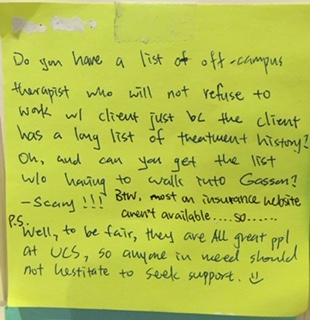
No, I don’t. I wish I did. I know it can be very hard to arrange good therapy. All I can recommend is the usual channels for referrals, or this site hosted by Psychology Today that can do regional searches: psychologytoday.com/us/therapists. Look for therapist descriptions that include specialties in the diagnoses you’ve encountered. But I’m pretty sure I’m not telling you anything you don’t already know.
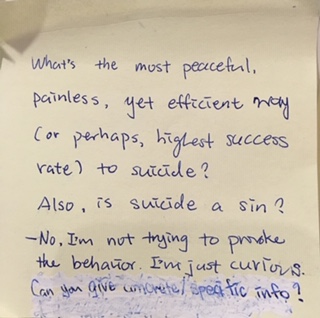
Anyone at BC in a crisis always has someone they can talk to, such as the PEC at university counseling (call health services at 617-552-3225 and ask to talk to the PEC) or at the National Suicide Prevention Hotline: 1-800-273-8255. I cannot give concrete, specific info about medical problems; I am a library wall, and librarians are duty-bound to provide resources, not medical advice. You can search our catalog for “suicide” and find a lot of material on the subject. Regarding sin, for Catholic doctrine, search with the subject heading “Bioethics — Religious aspects Catholic Church,” which covers a number of different areas such as euthanasia and suicide.
Best not to self diagnose – why not head over to Health services (bit.ly/BostonCollegeHealth) and have them make the call. Feel better soon!
Think back to December 1st. Did a you get attacked by an animal on that day? If yes, was that animal raccoon-like? If yes, was that animal a raccoon? There you are. In all seriousness, if you did get bitten/scratched by a wild animal and you’re not sure what kind of animal it was, you should probably go to a doctor to have them check it out. There are a lot of nasty diseases out there.
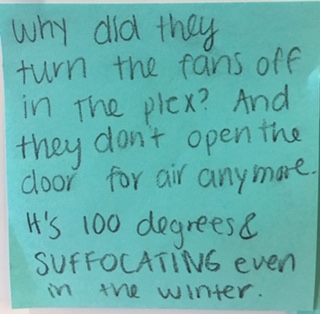
Terry Gilman (Plex Facilities Mgr.) tells me they work hard to maintain the “ideal” temperature of about 72F; it’s hard in an aging building. They can’t open doors if it’s below 65F, because the heating system will crank up. Fans are put in place in warmer months. The spin room and multipurpose room have ac; the main gym does not, but they will open the big doors when it gets to 65-70F.
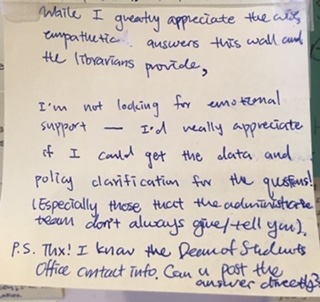
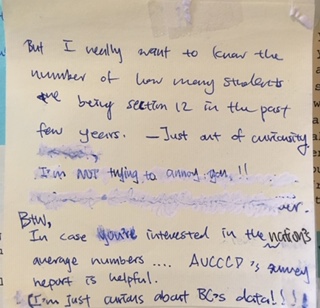
UCS has responded about Section 12 #’s: “We do not have a number of people who have been involuntarily committed to a psychiatric hospital (section12), so I cannot provide that. You are correct to say that it is quite low. Most people who go to a hospitalization do so collaboratively rather than involuntarily.”
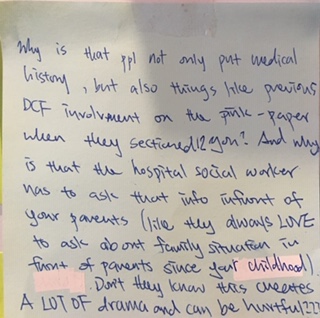
Yes, I agree, that seems like it would be a difficult situation, and I’m sorry you (or someone you know) had to go through it. It sounds like your complaint is with the hospital staff, so I recommend addressing them.
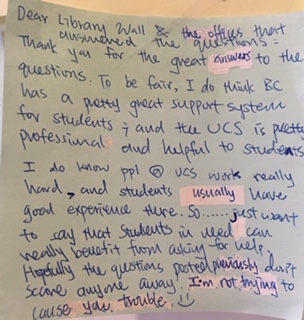
Thank you, it’s good to hear these answers are helping. And I agree, UCS and the Dean of Students office are full of professionals who really care about students’ welfare.
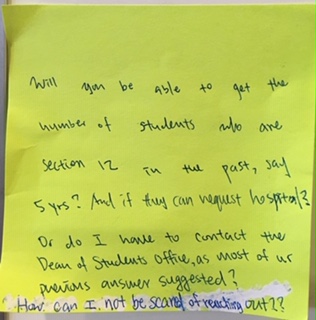
It sounds like what you need is assurance that you won’t lose control over decision-making in the process of healing. Those numbers may or may not provide that assurance for you, even if they’re quite low. I do recommend you contact the Dean of Students office for your questions about policies & how you might be affected.
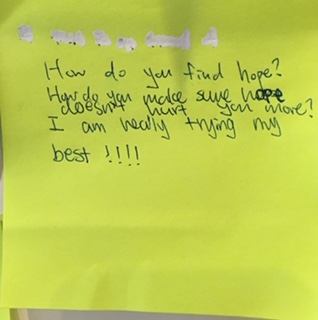
I can tell you’re trying your best. I admire your persistence. In fact, your persistence is inspiring and has given at least one of my assistants the courage to work through some of their own difficulties. So it doesn’t seem from my perspective like hope is what’s missing. Maybe it’s trust? When you fear that trust could be betrayed, it’s hard to take a risk. But you’ve also already demonstrated your courage in sharing as much as you have here. You really are hopeful & courageous, so I believe you have the capacity to keep trying until you heal.
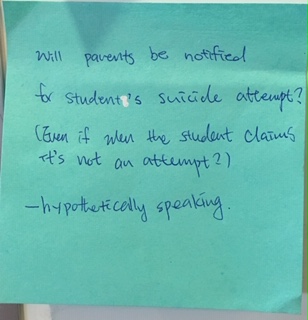
I’m sorry you were in such distress that you harmed yourself. As you’ve noted, it’s more common to do that than most people know. I recommend calling the Dean of Students office; you can say the Wall sent you. (Remember, a phone call can still be anonymous.) Tell them your concerns about HIPAA, parental notification, and the consequences of disclosing, like section 12 & mandated leave. Suggest what they can do that will help you trust the process. “Please contact Caroline Davis, Associate Dean for Student Outreach & Support at caroline.davis.2@bc.edu, 617-552-3470 or by stopping by 448 Maloney Hall to schedule an appointment.”
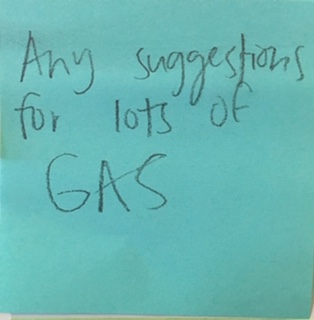
If you mean leaking natural gas pipes or appliances, definitely get them repaired. Natural gas in high concentrations can be toxic and explosive, and incidentally includes methane, a potent greenhouse gas. If you mean in your digestive tract, here are some suggestions from Mayo Clinic: bit.ly/mayo-gas.
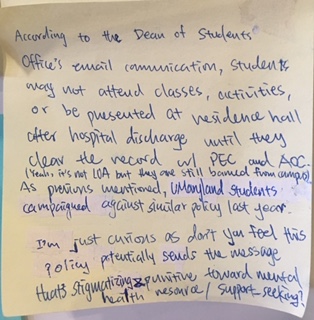
I’m sorry; I clearly misunderstood the question. I’m willing to bet there would be less opportunity for confusion about policy issues if you were to reach out directly to the Dean of Students office: Please contact Caroline Davis, Associate Dean for Student Outreach & Support at caroline.davis.2@bc.edu, 617-552-3470 or by stopping by 448 Maloney Hall to schedule an appointment.
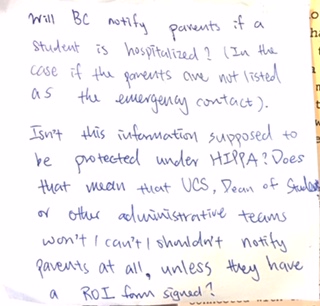
I’ve had my assistants reach out to UCS and the Dean of Students office for an answer, but I recommend you call the Dean of Students office directly, since you have a number of related policy questions you need answered. “Please contact Caroline Davis, Associate Dean for Student Outreach & Support at caroline.davis.2@bc.edu, 617-552-3470 or by stopping by 448 Maloney Hall to schedule an appointment.”
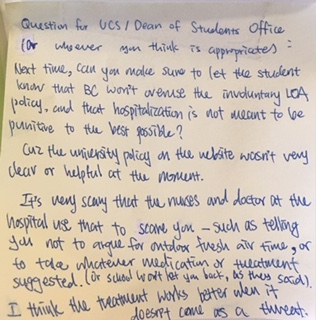
That does seem like a way that could risk damaging a patient’s trust & confidence. I’m sorry that happened. Please reach out to the Dean of Students office. I’m sure they would be interested to hear about your
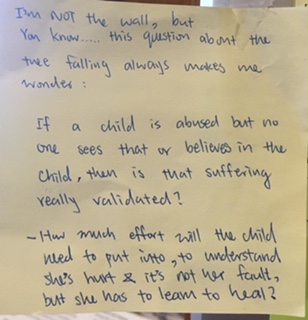
?Yes, so true. It takes so much effort and time to recover from childhood abuse, especially if the victim is surrounded by people who either don’t validate the reality or worse, actively deny it. Finding compassionate people who do believe the victim’s recollections can help them regain confidence in their own perceptions. Therapy can help a person nurture an adult perspective in which the harmed child is recalled with love and respect as a hero who created coping methods that helped them survive. The adult can then set those childhood coping methods aside, because the threat is in the past. Individual experience with the effort involved with healing varies a lot, but it’s always worth it. I believe you can do it.
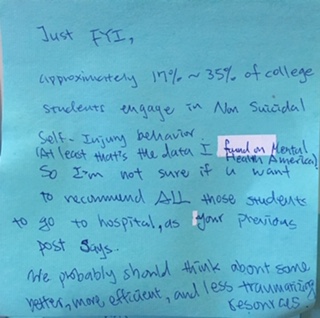
It sounds from other responses as if the Dean’s office would be interested in hearing what you have to say about less traumatizing options. Please reach out to them. This wall (and librarians who help answer it) are not equipped to give medical or medical policy advice. However, library staff *are* equipped to evaluate sources. If you click through to the sources for those figures, you’ll find that the lower % was established by a non-random internet survey, and asked about lifetime harm; it is both a low standard for evidence, and not necessarily about behavior during college years. The higher % was a very small sample (159) of a wide range of ages in UG classes at U. Mass Boston, and was intended as an instrument validation study for the Deliberate Self Harm Inventory (DSHI). Researchers caution that the results should not be used to estimate population prevalence for self-harm behaviors. If you are interested in further uses of the DSHI, I recommend searching for it in the PsycInfo database and selecting “test and measure” in the search drop-down menu.