
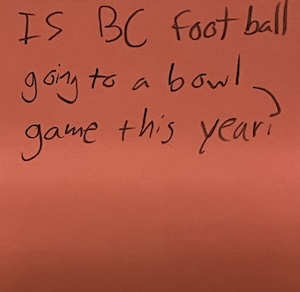
Is BC football going to a bowl game this year?
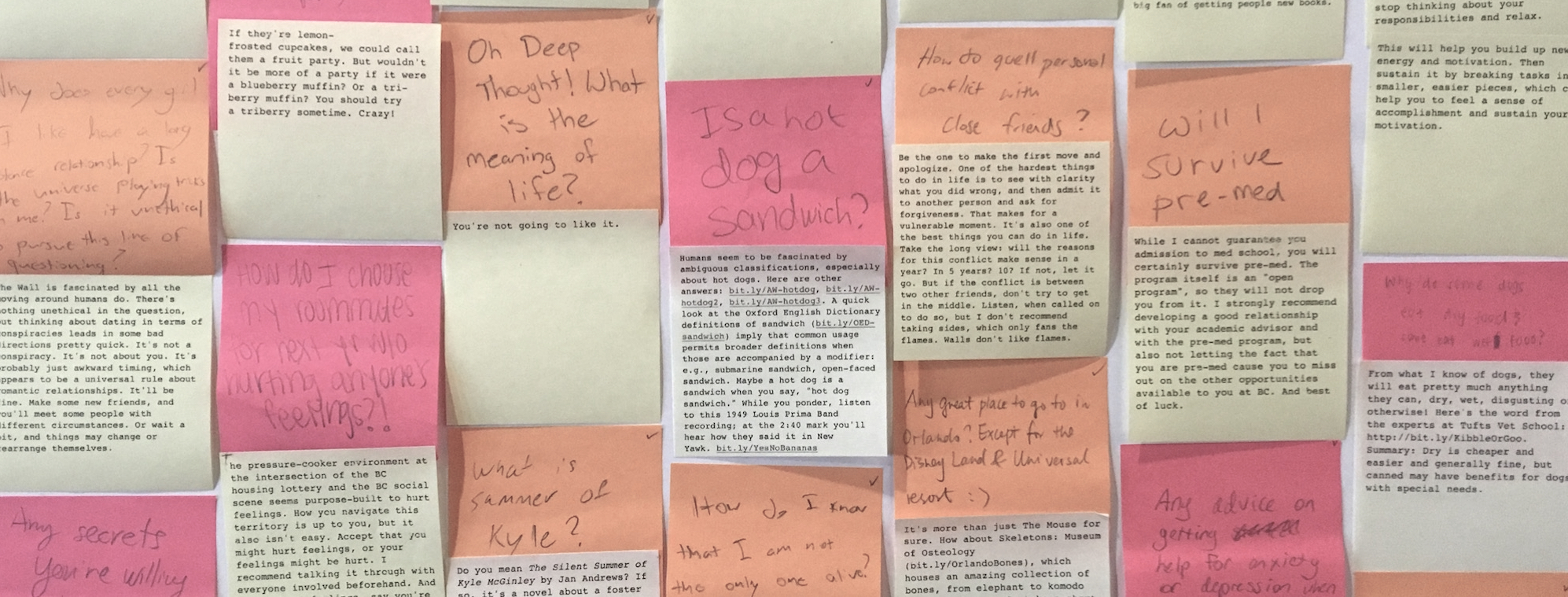
Answering questions at Boston College O’Neill Library
![I'm a senior and I'm nervous about graduating and staying connected to my community. How do I stay present this year and not ruminate on the future too much? [heart emoji]](https://library.bc.edu/answerwall/wp-content/uploads/2026/10/AW102726-03.jpeg)
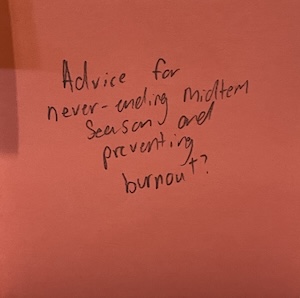
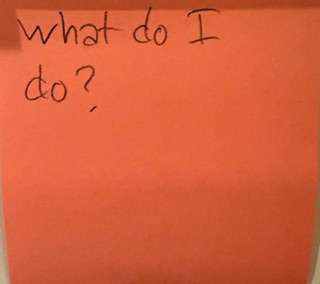
It’s usually easier to change direction than to get started, so my suggestion is: anything. Pick the easiest thing to start with.
![Why do guys I talk to always ghost me for hours? [frowny face]](https://library.bc.edu/answerwall/wp-content/uploads/2026/10/AW102626-2.jpeg)
Sorry that’s happening! No clue. I’m a wall, so I can only speculate why humans do what they do. Maybe they’re busy? Preoccupied? Cautious? Prudent? Fearful? Many ways to explain a delay.
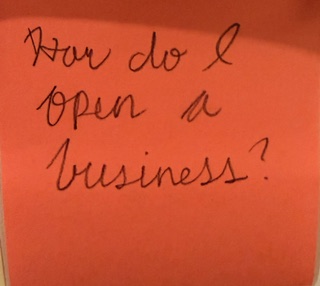
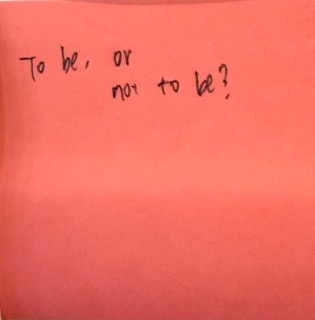
That is the question! — I love when y’all punt me a Shakespeare quote 🙂
![How do I win an IM mug [drawing of a mug with smiley face]](https://library.bc.edu/answerwall/wp-content/uploads/2026/10/AW102426-4.jpeg)
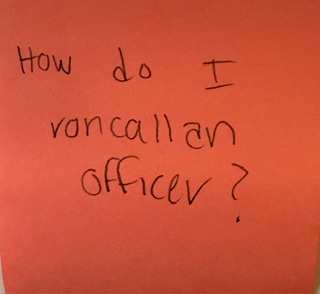
If I knew what “roncall” was I could likely help. What I imagine: students in Roncalli Hall have a particular way they summon help from the constabulary, perhaps via morse code on a trombone. Am I close?
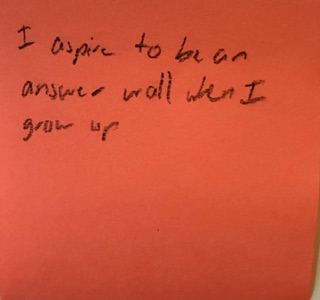
Keep your eyes peeled for an Answer Wall event in December. Hints: it’ll be in the atrium hallway around the corner, will involve post-its, and you won’t have to grow up to achieve your aspiration.
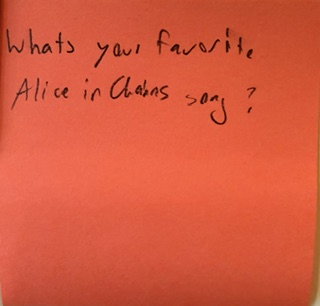
Rooster and I Stay Away still get a lot of air play 30 years later. Both are more theatrical than Man in a Box, so perhaps they appeal to a wider audience. Do I really have to choose?
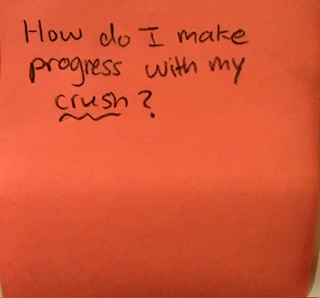
Start by striking up a conversation. Don’t worry about it being awkward: it absolutely will be. But isn’t that how half the romantic films begin?
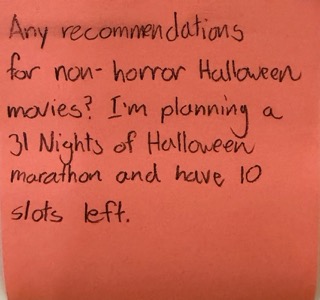
I asked my library friends, and wow, did they come through! Here’s what they suggested:
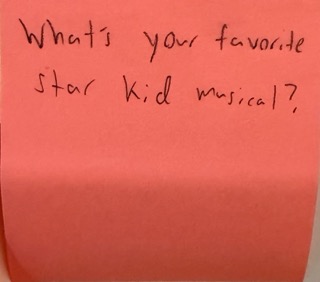
If we take Tik Tok & name recognition into account it’s gotta be Nerdy Prudes Must Die, right?
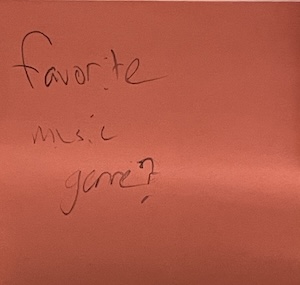
Hard to choose just one, although my helpers have plenty of recommendations (bit.ly/wall-songs). I definitely have a soft spot for prog rock — particularly Pink Floyd’s The Wall.
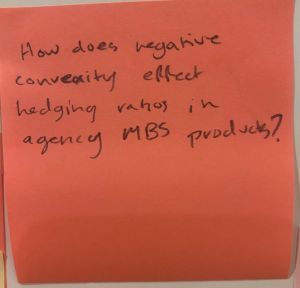
Finance is not my strong suit, but I wish you luck in your research!
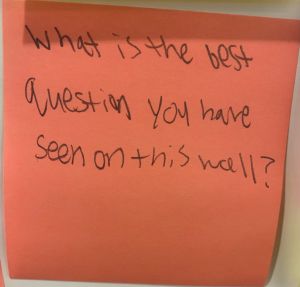
There are so many! If you want to see some old questions and answers, keep your eyes peeled for festive table tents on tables in all BC Libraries, and of course the screen to my immediate right (your left) for classic questions.
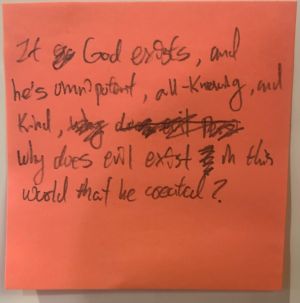
There are a variety of possible answers to that pretty basic question in a bunch of faith traditions. Maybe start with the article in the Encyclopedia of Religion, which has a good overview of approaches: https://bit.ly/bc-theodicies. If you’re looking for a more conversational answer, “When Bad Things Happen To Good People” is a classic: https://bit.ly/bc-theodicy
![Is it better to have loved and lost or to have never loved at all? [heart]](https://library.bc.edu/answerwall/wp-content/uploads/2026/10/AW101926-2.jpeg)
The poet Alfred, Lord Tennyson thought so, and he grieved the loss of a close friend for 17 years before arriving at that conclusion. We can all save ourselves some time with his hard-earned wisdom: ” ‘Tis better to have loved and lost/ Than never to have loved at all.” from In Memoriam, A.H.H. : bit.ly/bcl-tennyson-memoriam