The Cost of Knowledge – Open Access Week at Boston College
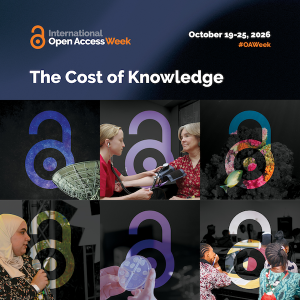
Every year for a week in October, this year October 19-23, libraries and scholars across the world celebrate Open Access, a method of publishing scholarly articles, books, and educational materials that grants users free access. While traditional publishers often charge a subscription fee, open access publications use a different funding mode in what’s known as “Gold” Open Access: authors or institutions cover the cost of publication instead of charging users for access. This is distinct from “Green” Open Access, which refers to materials that are submitted to repositories prior to their official publication: an author chose to submit their pre-prints to an institutional repository, like the URBC, so that a version of their research is available to the public, often prior to the official publication.
Open Access policies and publications have gained popularity over the years as it can generally help scholars reach a wider layer of researchers. And Boston College, having hosted the Open Access Publishing fund for over a decade, has seen that increase in popularity as well. Beyond just articles, the case can also be made for further publications, such as books. Peter Suber’s Open Access for example, is available online for free, or if you prefer a physical copy, is available for purchase. Boston College’s Open Access Fund most recently helped cover the cost of publishing Jesse Lopes’ The Origin of Causal Interference of Perception, which will be available open access in November
While the benefits of OA continue to accrue, scholars are understandably concerned about the potential challenges or benefits of AI access to open repositories. Ultimately, every form of publishing has its benefits and drawbacks. Researchers, authors, scholars, or even casual readers just want to share or access information, which can happen through a variety of paths. Staff here at the Boston College Libraries are committed to following developments in open access, generative AI, and the policies that allow us to legally and fairly reuse materials.
If you have a question about the implications of submission to a particular repository or a particular model of publishing, talk to us! While we still are finding answers in a changing landscape, we can certainly discuss options and outline the benefits and drawbacks of each of your options.
